
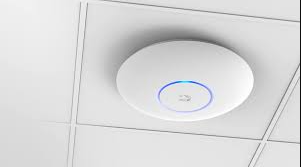
The wireless access point is a device that allows you to transform the wired network (ie the home network) into a wireless network.
It is not very popular since its task, at least in part, is often performed by some modem routers.
In fact, the wireless access point, intended as a device in itself, has become not very widespread also thanks to the evolution of technology.
Since it only allows navigation in one’s own computer network. If, on the other hand, it is combined with a modem router, this allows you to share the internet connection to all mobile devices.
Now let’s try to better understand how the best wireless access point works, we will do it in a simple way so that even the less experienced can understand what we are talking about.
What is Wireless Access Point
We have just said that a wireless access point allows you to transform the wired network into a wireless network by making internet access available to all those devices equipped with a wifi network card.
However, what the wireless access point cannot do is provide a direct connection to the ADSL line, it must necessarily be connected to a modem that has a connection with the chosen operator’s control unit.
In principle, we can therefore say that the wireless access point performs the same task as a switch, that is, to provide an internet connection to multiple devices, but in the absence of cables.
The wireless access point signal is transmitted through high-frequency radio waves. Initially, the available band was that of 2.4 GHz, divided into several channels.
Later, thanks to the exponential growth of networks and mobile devices, in urban centers these channels became insufficient to ensure effective coverage.
To overcome this gap, a second frequency has been added to the latest generation wireless access points, 5 GHz. The main transmission standards are 3, named after the letters of the alphabet: b, g, n.
The new wireless access points allow the use of all three standards and have the initials b / g / n.
The last is the “n” and allows the connection of devices equipped with a 5 GHz “n” Wifi card, guaranteeing a theoretical maximum speed of 300 Mbit / s.
On the other hand, older or low-quality devices will be able to continue to connect to the network by relying on the b or g standard.
Functions of the Best Wireless Access Points
The function of the best wireless access point: it is not limited only to transforming the wired network into a wireless network, but can perform other tasks, different according to our needs.
Let’s see together all the ways in which a wireless access point works:
Root Mode: It is the standard mode of operation of the Access Point, the one we have just talked about.
With this function, the device is connected to the wired network (fixed network) and works as an access point to the network for wireless mobile devices (PDAs, Laptops, Cell Phones…).
Bridge Mode: With this function, the wireless access point creates a wireless connection between two (point-to-point) or more (point-to-multipoint) access points, a sort of bridge.
Each of the affected access points must be connected to a wired network segment. In this way, the different segments of the wired network will be interconnected.
Repeater Mode: With this type of configuration it is possible to increase the range of coverage of the wireless network when the wired network cannot reach certain areas or to guarantee optimal performance.
The expansion of the connection takes place without adding additional wires or using additional wifi routers.
Client Mode: With this function, the access point acts as a client to another access point in “root” mode.
This means that one or more clients are connected to the wired (fixed line) side of the access point that operates as a client, and in this way, they can access a wireless network even if they do not have a wireless network card.
Wireless Access Point – Security
In addition to the operating modes of wireless access points, it is good to say a few words on security.
The ability to access the network that the access point offers must be controlled and secure, in order to prevent malicious or unauthorized interference, in order to protect all access point data. To do this there are several options:
Hide the access point: This involves entering the configuration pages and setting the Hidden SSID or Hide SSID flags. This system is the most basic and, as expected, the least secure, but it is still worth considering.
Encrypt data: This method can be more decisive. It consists in encrypting the data of the access point using an algorithm through the WEP and WPA protocols, in this way the data transmission will not be decrypted.
Enter a password: That is, restrict access to the access point only to owners of the password set by the device owner.
This password can be in both textual and hexadecimal format, depending on the type of device. The length can vary but is generally 64 or 128 bits.